

Accessibility Features House Design 2026 | Inclusive Building Guide
Designing for accessibility creates homes that work for everyone—families with young children, those with temporary injuries, people with disabilities, and aging residents who want to remain in their homes. Universal design principles make homes more functional for all users.
This guide covers accessibility features to consider when building your home in Bulgaria.
Browse Accessible House Plans →
Why Design for Accessibility?
Universal Benefit
Accessible design helps everyone:
- Parents with strollers
- People carrying heavy loads
- Temporary injury recovery
- Aging family members
- Visitors with mobility aids
- Everyone in bad weather
Future-Proofing
Planning ahead makes sense:
- 90% cheaper during construction vs. retrofit
- Allows aging in place
- Accommodates changing needs
- Increases resale market
- Provides flexibility
Growing Importance
Demographics are shifting:
- Aging populations worldwide
- Desire to stay home longer
- Multigenerational living increasing
- Accessibility expectations rising
Single-Story Advantage
Ground-Level Living
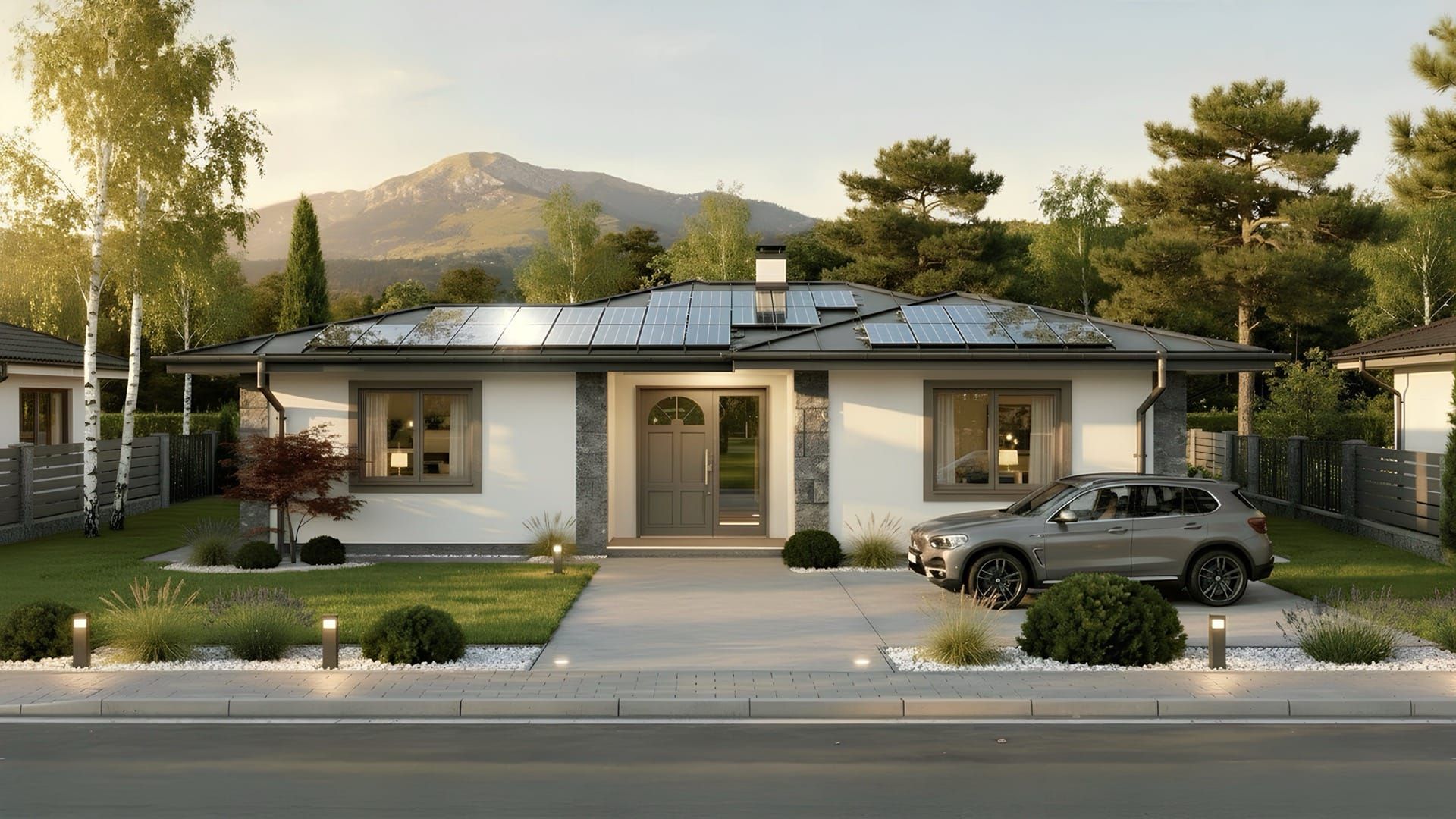
Our under-100m² plans offer natural accessibility:
C-101 (80m²):
- Entirely single-story
- No stairs required
- All functions on one level
- Compact, manageable space
- View C-101 →
C-102 (97m²):
- Ground-level throughout
- Two bedrooms on main floor
- No internal level changes
- Easy throughout movement
- View C-102 →
Benefits
Single-story living provides:
- No stairs to navigate
- Easier maintenance
- Simple evacuation
- Lower fall risk
- Manageable cleaning
Entrance and Approach
Zero-Step Entry
Eliminate entrance barriers:
Design elements:
- Grade-level threshold
- Covered entry for weather protection
- 120cm minimum path width
- Non-slip surface material
- Adequate lighting
Cost: Minimal if planned from start
Door Requirements
Accessible entry doors:
- 90cm minimum clear width (100cm preferred)
- Lever handles (not knobs)
- Low threshold (15mm maximum)
- Contrast with surroundings
- Easy-to-operate locks
Covered Approach
Weather protection essential:
- Covered walkway or entry
- Adequate lighting
- Seating for rest if needed
- Package delivery space
- Non-slip surfaces always
Interior Circulation
Hallway and Door Width
Movement throughout home:
Minimum widths:
- Hallways: 100cm (120cm preferred)
- Interior doors: 80cm clear (90cm better)
- Turning space: 150cm circle
T-shaped turning:
- 180° turn possible
- 150cm length minimum
- 90cm arms width
Floor Surfaces
Safe, consistent flooring:
Choose:
- Level transitions (no lips)
- Non-slip materials
- Low-pile, firm carpet (if used)
- Matte finishes (reduce glare)
Avoid:
- High thresholds
- Loose rugs
- Highly polished floors
- Thick, soft carpet
Lighting
Visibility for safe movement:
- Consistent lighting levels
- No dark corridors
- Light switches at entries
- Night lighting options
- Natural light where possible
Bathroom Accessibility
Space Requirements
Adequate room for assistance:
Minimum dimensions:
- 150cm clear floor space
- 90cm doorway (outward opening)
- 75cm beside toilet
- Roll-in or low-threshold shower
Shower Design
Walk-in or roll-in preferred:
Features:
- Zero threshold (curbless)
- Non-slip floor
- Handheld showerhead
- Grab bar provisions
- Fold-down seat option
- Adequate drainage slope
Toilet Accessibility
Usable for all:
Requirements:
- 45-48cm seat height (comfort height)
- 75cm clearance beside
- Grab bar provisions
- Enough space for assistance
Fixtures
User-friendly choices:
- Lever-style faucets
- Single-handle controls
- Adequate mirror height
- Counter knee space possible
- Good lighting at mirror
Future-Proofing
Install during construction:
- Blocking in walls for grab bars
- Plumbing for future seat
- Wider door than minimum
- Curbless shower ready
Kitchen Accessibility
Work Area Design
Usable by various users:
Counters:
- Variable heights possible (75-85cm)
- Knee space under some sections
- Rounded corners
- Pull-out work surfaces
Storage:
- Pull-out drawers vs. shelves
- Lazy Susans in corners
- Lower wall cabinet sections
- Reachable from seated position
Appliances
Accessible selection:
- Side-opening oven
- Cooktop with front controls
- Side-by-side refrigerator
- Dishwasher raised 15cm
- Microwave at counter level
Sink Area
Practical design:
- Knee space below (removable cabinet)
- Lever or touchless faucet
- Shallow sink (15cm deep)
- Insulated pipes below
Bedroom Considerations
Space and Access
Room for movement:
- 100cm pathway on accessible side
- 90cm minimum at foot of bed
- Closet with accessible rod heights
- Light switch from bed
Electrical
Convenient placement:
- Outlets at 45cm height
- Switches at 90-100cm height
- Outlets on both sides of bed
- USB charging accessible
Closet Design
Reachable storage:
- Adjustable rod heights
- Pull-down rod option
- Drawer storage vs. high shelves
- Adequate lighting inside
Smart Home and Controls
Switch and Outlet Heights
Reachable for all:
Recommended heights:
- Light switches: 90-100cm
- Outlets: 45-60cm
- Thermostats: 120cm maximum
- Intercom/doorbell: 100-120cm
Automated Options
Technology assistance:
- Voice-controlled lighting
- Automated door locks
- Smart thermostats
- Video doorbell
- Automated blinds
Safety Systems
Protection and alerts:
- Visual fire alarms (strobe)
- Low-frequency alarms
- Connected to mobile
- Emergency response
Outdoor Accessibility
Terrace and Patio
Usable outdoor space:
- Level access from interior
- Non-slip surface
- Shade provision
- Furniture clearances
- Stable, firm surface
Garden Access
Connected to outdoors:
- Accessible pathways
- Raised bed option
- Seating areas
- Level transitions
- Night lighting
Parking
Easy vehicle access:
- Level surface
- Wide parking area
- Close to entrance
- Covered if possible
- Clear pathway
Cost Considerations
Minimal Additional Cost
During new construction:
| Feature | Additional Cost |
|---|---|
| Wider doors | €50-100/door |
| Curbless shower | €200-500 |
| Wall blocking for grab bars | €50-100 |
| Lever handles | No additional |
| Single-story design | Often saves money |
Retrofit Costs
Much higher after construction:
| Feature | Retrofit Cost |
|---|---|
| Widen doorways | €300-800/door |
| Add accessible bathroom | €5,000-15,000 |
| Add ramp | €1,000-3,000 |
| Install stair lift | €3,000-8,000 |
| Add elevator | €20,000-50,000 |
Value Perspective
Investment benefits:
- Broader resale market
- Aging-in-place capability
- Multigenerational use
- Rental flexibility
- Future-proofing
Regional Considerations
Bulgarian Building Standards
Current requirements:
- Public buildings have accessibility codes
- Residential requirements less strict
- Voluntary for private homes
- Good practice encouraged
Climate Factors
Consider Bulgarian conditions:
- Snow and ice at entries (mountain areas)
- Summer heat (shading important)
- Seasonal changes (flexible design)
- All-weather access planning
Frequently Asked Questions
Does accessible design look institutional?
Not at all. Modern universal design is seamless and attractive. Features like curbless showers and lever handles are stylish mainstream choices.
Can I add accessibility features later?
Yes, but at 10-20x the cost of including during construction. Plan basic infrastructure (wider doors, wall blocking, single-level) now and add features as needed.
Is single-story less economical?
For smaller homes under 100m², single-story is often more economical—simpler structure, no stairs. Larger homes may require two stories for compact footprint.
What about resale value?
Accessible homes appeal to larger buyer pool: aging buyers, families with elderly parents, anyone valuing convenience. Growing demographic advantage.
Do I need to follow specific standards?
Residential homes in Bulgaria don’t require accessibility standards, but following international guidelines (like ISO or ADA concepts) ensures practical functionality.
Build for Everyone
Designing for accessibility from the start costs little but provides lasting value. Whether for yourself, family members, or future residents, accessible homes are simply better homes.
Your next steps:
- Browse accessible house plans — single-story designs
- Consider your future needs honestly
- Plan key features during design
- Contact Architect Miglena for accessibility guidance
All plans include 15% discount—build your accessible Bulgarian home today.