

Energy-Efficient House Design in Bulgaria 2026 | Save on Heating
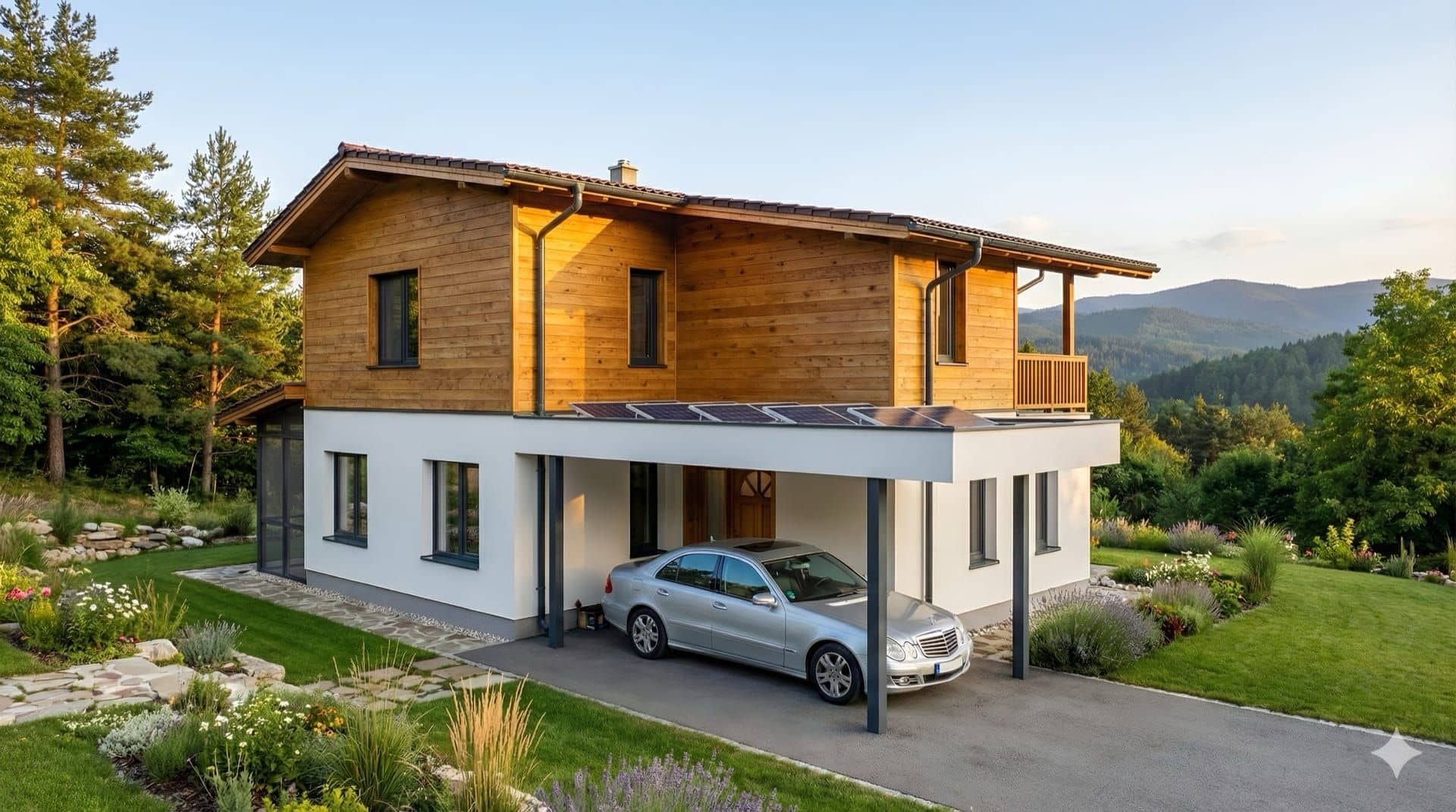
Energy costs represent one of the largest ongoing expenses for Bulgarian homeowners. With proper design, you can cut heating costs by 50% or more compared to conventional construction—savings that compound year after year.
This guide covers the key principles of energy-efficient design for Bulgarian conditions, helping you build a home that’s comfortable, affordable to run, and environmentally responsible.
Browse Energy-Efficient House Plans →
Why Energy Efficiency Matters in Bulgaria
Climate Context
Bulgaria experiences a continental climate:
- Cold winters: -10°C to -20°C common in northern regions
- Hot summers: 35°C+ in lowlands
- Heating season: 5-7 months depending on location
- Significant temperature swings: 50°C+ annual range
This climate demands homes that retain heat in winter while staying cool in summer.
Cost Impact
Typical heating costs for a 100m² Bulgarian home:
- Poorly insulated: €150-250/month in winter
- Standard construction: €80-120/month
- Energy-efficient: €40-70/month
- Highly efficient: €20-40/month
Over 20 years, the difference between poor and excellent efficiency can exceed €30,000.
Key Energy Efficiency Principles
1. Building Orientation
How your home faces the sun dramatically affects energy performance:
Optimal orientation for Bulgaria:
- Main glazing facing south (±15°)
- Living spaces on south side
- Bedrooms can face east (morning sun)
- Minimize north-facing windows
- Service areas (storage, utility) on north
Benefits:
- Free passive solar heating in winter
- Reduced heating demand by 10-20%
- Better natural lighting
- Improved thermal comfort
Our plans can be mirrored or rotated to suit your site’s optimal orientation.
2. Insulation Strategy
Bulgarian building codes require minimum insulation, but exceeding minimums pays dividends:
Recommended insulation levels:
| Element | Minimum (Code) | Recommended | High Performance |
|---|---|---|---|
| Walls | 10cm | 15-20cm | 20-25cm |
| Roof | 15cm | 20-25cm | 25-30cm |
| Floor | 8cm | 10-15cm | 15-20cm |
| Windows | U=1.4 | U=1.1 | U=0.8 |
Insulation types:
- EPS (Expanded Polystyrene): Most common, good value
- XPS (Extruded Polystyrene): Better for ground contact, moisture resistance
- Mineral wool: Excellent for fire safety, sound insulation
- PIR/PUR foam: Highest performance per thickness
3. Thermal Bridges
Thermal bridges—where insulation is interrupted—waste energy:
Common problem areas:
- Window and door frames
- Wall corners
- Floor/wall junctions
- Roof connections
- Balcony attachments
Solutions:
- Continuous external insulation
- Thermal break frames
- Careful detail design
- Proper installation supervision
Our architectural plans include thermal bridge details to guide construction.
4. Airtightness
Air leakage can account for 30-40% of heat loss:
Key airtightness measures:
- Continuous vapor barrier on warm side
- Sealed window and door installations
- Service penetration sealing
- Quality workmanship
Testing:
- Blower door test measures airtightness
- Target: <3 air changes/hour at 50 Pa pressure
- Passive house standard: <0.6 ACH50
5. Glazing Strategy
Windows are the weakest point in the building envelope:
Bulgarian recommendations:
- South windows: Maximize for solar gain (with summer shading)
- East/west windows: Moderate size, consider shading
- North windows: Minimize, use high-performance frames
- All windows: Minimum double-glazed, triple recommended in mountains
Glass selection:
- Low-E coating reduces heat loss
- Solar control glass for west-facing where needed
- Gas-filled cavities (argon or krypton) improve performance
Heating System Integration
Energy-efficient buildings allow smaller, cheaper heating systems:
Floor Heating
Ideal for energy-efficient homes:
- Works at lower temperatures (35-40°C vs. 60-70°C for radiators)
- Compatible with heat pumps
- Even heat distribution
- Integrates with slab foundation construction
Our slab-on-grade designs (C-101, C-102) are optimized for floor heating.
Heat Pumps
Increasingly popular in Bulgaria:
- Air-source: 3-4x more efficient than direct electric
- Ground-source: 4-5x efficiency but higher installation cost
- Work best with low-temperature heating (floor heating)
- Can provide cooling in summer
Wood and Pellet Heating
Traditional but still effective:
- Abundant local fuel supply
- Can be primary or backup heat source
- Modern pellet boilers achieve 90%+ efficiency
- Good for rural locations with wood access
Solar Thermal
Free hot water in Bulgarian climate:
- Evacuated tube collectors work even in winter
- Can contribute to heating in spring/autumn
- Typical system: 4-6m² collectors + 200-300L tank
- Provides 60-80% of annual hot water needs
Our Energy-Efficient Designs
House C-101 (80m²)
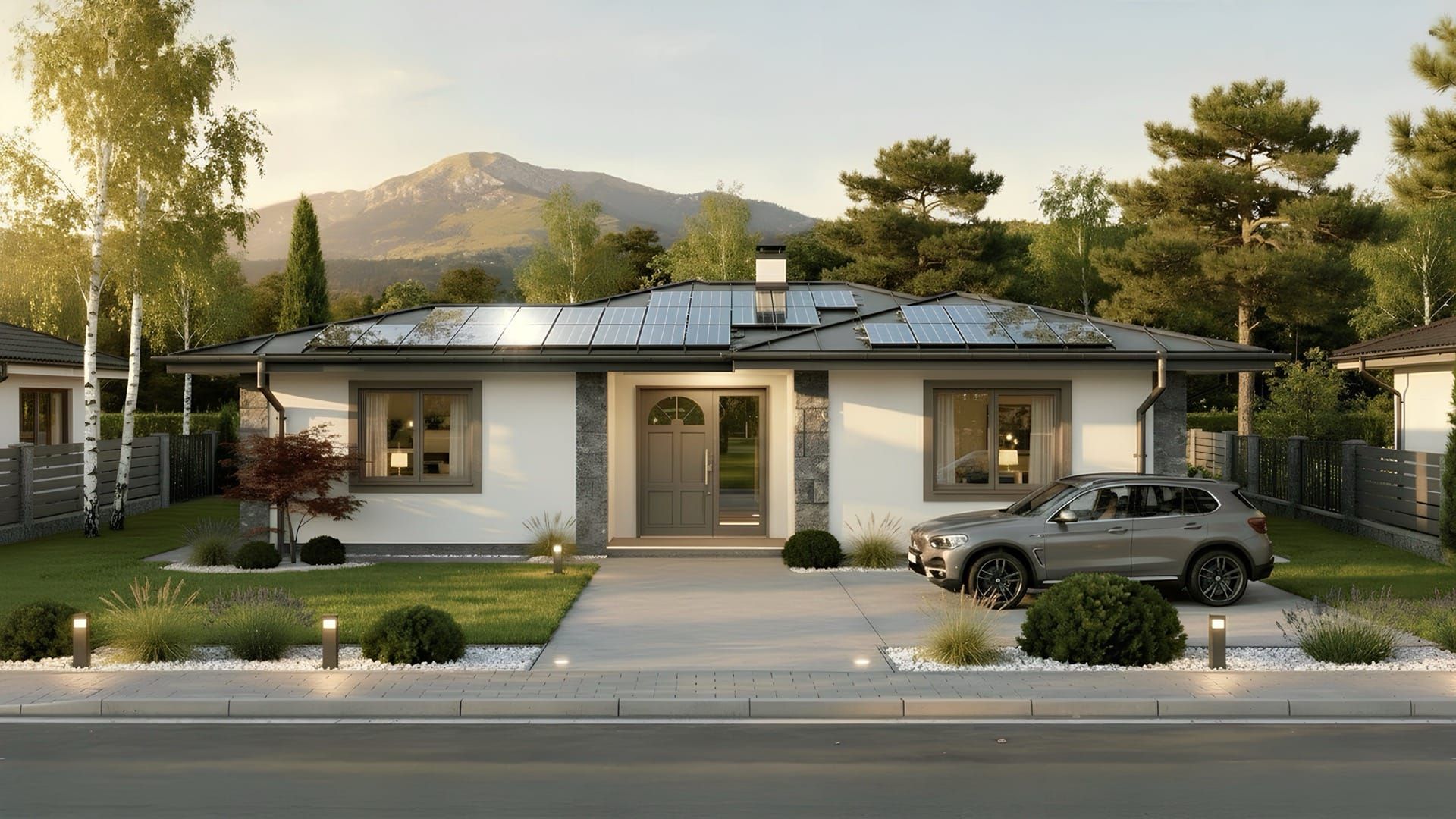
Compact efficiency:
- Efficient rectangular form minimizes surface area
- Single-story reduces heat loss to attic
- South-oriented design in plans
- Suitable for floor heating integration
- Price:
€2,493€2,168
House C-102 (97m²)
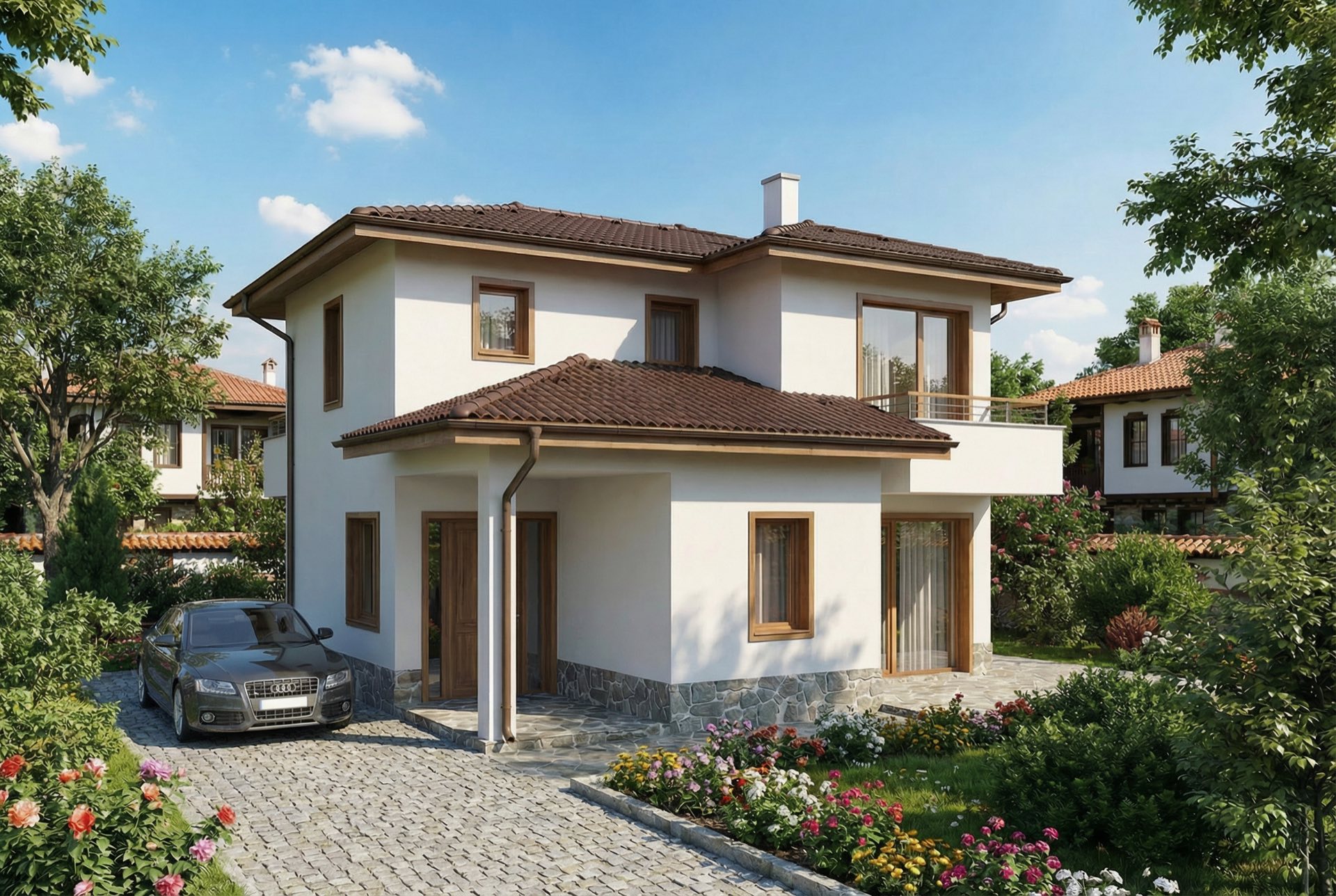
Family efficiency:
- Optimized envelope ratio for size
- Ground-level living reduces losses
- Verandah provides summer shading
- Floor heating compatible design
- Price:
€2,731€2,375
House B-103 (211m²)
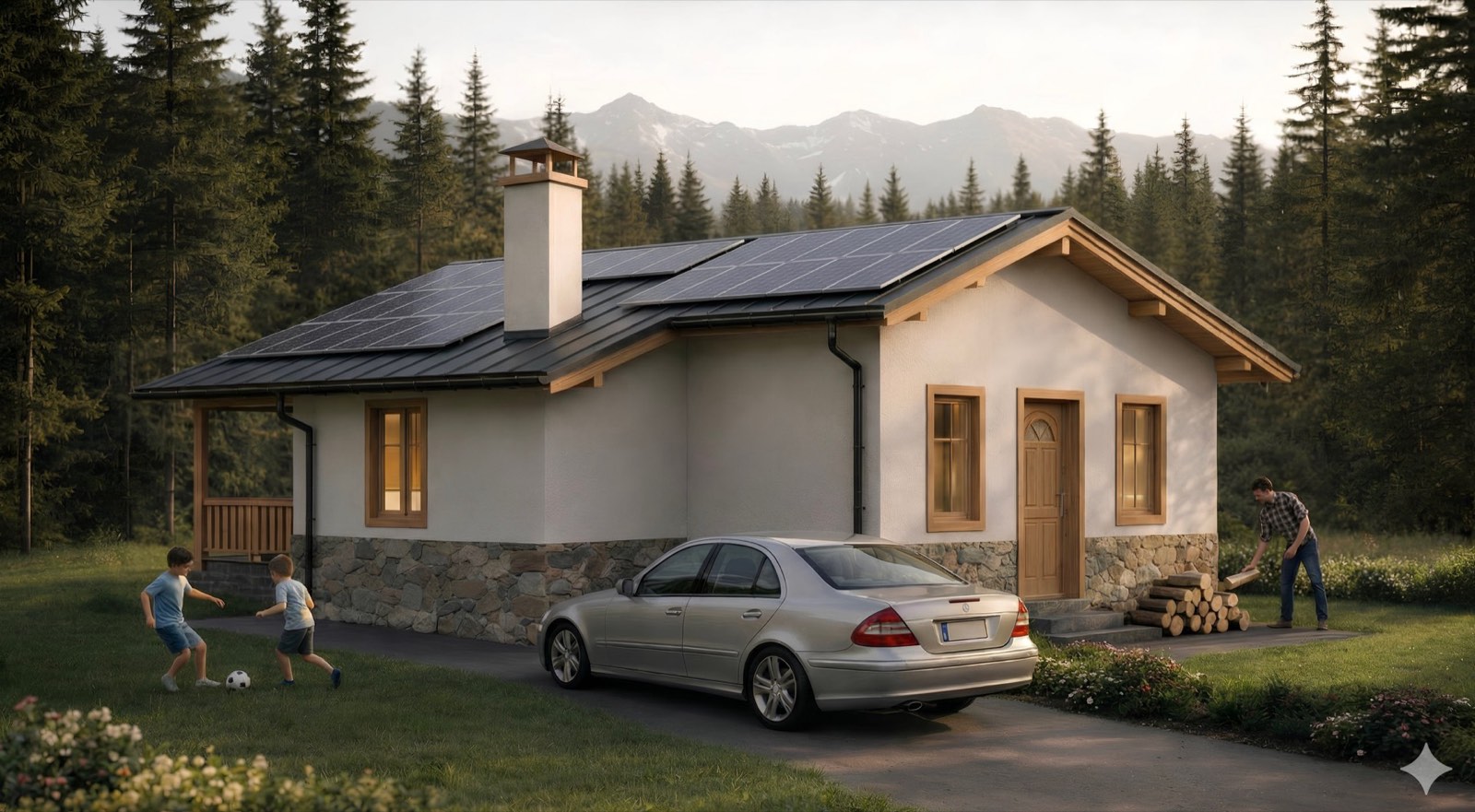
High-performance alpine design:
- Designed for mountain conditions
- Winter garden solar buffer space
- Carport with photovoltaic integration
- Premium insulation specifications
- Price:
€5,667€4,817
Bulgarian Energy Efficiency Incentives
Current Programs
Bulgaria offers various incentives:
- EU-funded renovation programs (check current availability)
- Reduced VAT on certain energy improvements
- Net metering for solar electricity
- Energy efficiency certificates add property value
Energy Performance Certificates
Required for all new buildings:
- Classes A to G (A being most efficient)
- Our designs typically achieve Class B or better
- Higher classes command premium resale/rental values
Cost vs. Savings Analysis
Additional Investment for High Efficiency
Compared to basic code-compliant construction:
| Upgrade | Additional Cost | Annual Savings | Payback |
|---|---|---|---|
| +10cm wall insulation | €800-1,200 | €150-200 | 5-7 years |
| Triple-glazed windows | €1,500-2,500 | €100-150 | 12-18 years |
| Floor heating system | €2,000-3,500 | €100-200 | 12-25 years |
| Heat pump | €3,000-5,000 | €300-500 | 8-12 years |
| Solar thermal | €2,000-3,000 | €150-250 | 10-15 years |
Combined package for 80-100m² home:
- Investment: €8,000-15,000 additional
- Annual savings: €600-1,000
- Payback: 10-15 years
- Lifetime savings: €20,000-40,000+
Frequently Asked Questions
Is passive house construction practical in Bulgaria?
Yes, though full Passivhaus certification isn’t common due to cost. However, adopting passive house principles (super-insulation, airtightness, heat recovery ventilation) is increasingly practical and worthwhile.
What’s the most cost-effective energy efficiency investment?
Insulation consistently offers the best return. Upgrading from minimum to good insulation levels typically pays back within 5-10 years and continues saving indefinitely.
Can I retrofit energy efficiency later?
Some improvements (external insulation, windows) can be added later. However, building efficiency in from the start is much more cost-effective than retrofitting.
Do energy-efficient homes need special maintenance?
Airtight homes benefit from mechanical ventilation with heat recovery (MVHR) to maintain air quality. Otherwise, maintenance is similar to conventional construction.
Build Efficient from the Start
Energy efficiency is easiest and most cost-effective when designed in from the beginning. Our ready-made plans incorporate efficiency principles and can be enhanced to your desired performance level.
Your next steps:
- Browse energy-efficient plans — all designed with efficiency in mind
- Review C-101 (80m²) or C-102 (97m²) for efficient smaller homes
- Explore B-103 (211m²) for mountain performance
- Contact Architect Miglena to discuss efficiency upgrades for your project
All plans include 15% discount and efficiency-conscious design.