

House Construction Timeline in Bulgaria 2026 | Planning Guide
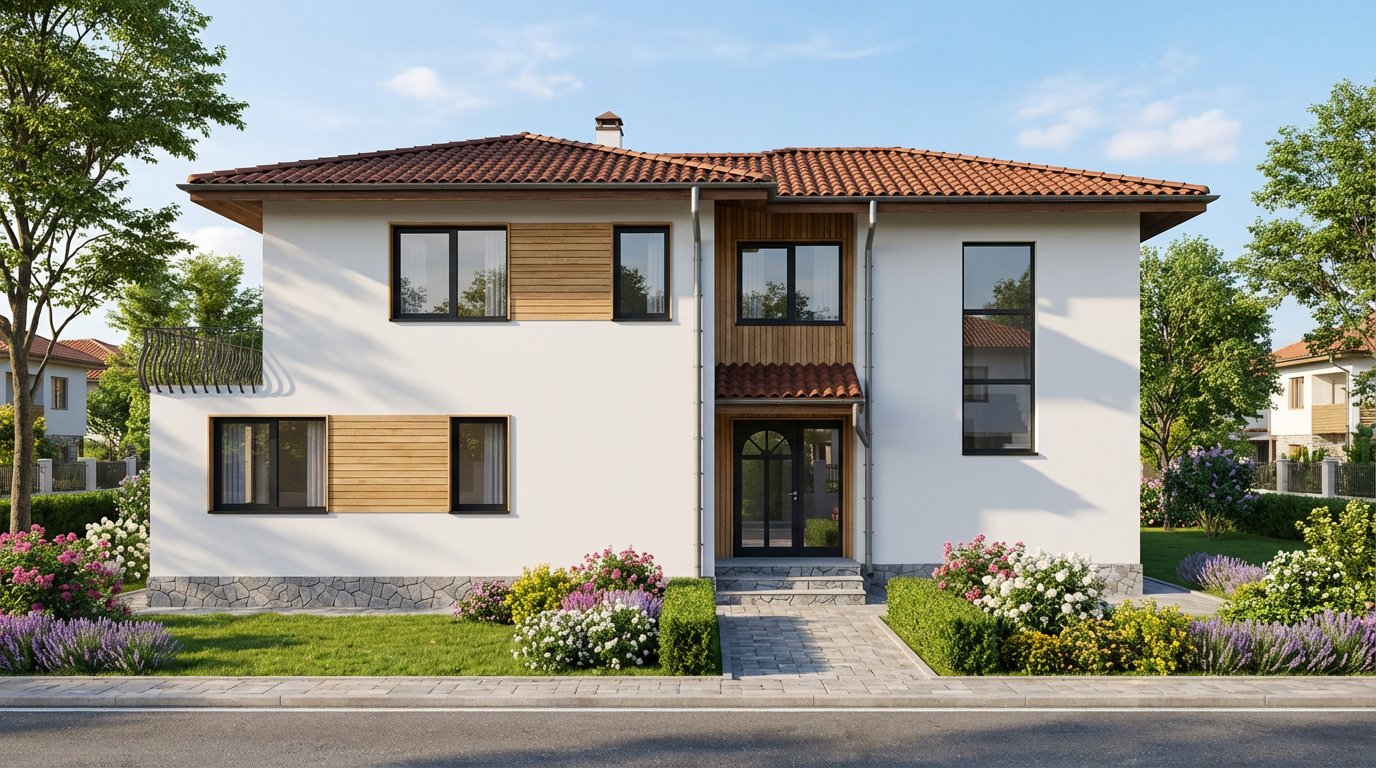
Understanding realistic timelines is essential for planning your Bulgarian house project. Whether you’re self-building under 100m² or working with contractors on a larger home, knowing what to expect helps you plan financing, coordinate life changes, and avoid frustration.
This guide breaks down typical timelines for each construction phase in Bulgarian conditions.
Overview: Total Project Timelines
Self-Build Under 100m²
Typical total duration: 8-14 months
| Phase | Duration | Notes |
|---|---|---|
| Planning & permits | 3-5 months | Can start during off-season |
| Foundation | 2-4 weeks | Weather dependent |
| Structure | 6-10 weeks | Your pace matters |
| Weathertight | 2-4 weeks | Get roof on before winter |
| Systems | 4-8 weeks | Electrical, plumbing |
| Finishing | 6-12 weeks | Most variable phase |
Contractor-Built 100-200m²
Typical total duration: 10-18 months
| Phase | Duration | Notes |
|---|---|---|
| Planning & permits | 4-6 months | More complex documentation |
| Foundation | 2-4 weeks | Professional crews faster |
| Structure | 8-12 weeks | Depends on complexity |
| Weathertight | 3-5 weeks | Including windows/doors |
| Systems | 4-8 weeks | Multiple trades |
| Finishing | 8-14 weeks | Quality takes time |
Larger Projects 200m²+
Typical total duration: 14-24 months
Complex projects require:
- Extended permit process
- Detailed engineering
- More construction phases
- Professional project management
- Quality control inspections
Pre-Construction Phase: 3-6 Months
Land Purchase and Verification (4-8 weeks)
Before building starts:
- Property search and negotiation: 2-4 weeks
- Legal due diligence: 1-2 weeks
- Purchase transaction: 1-2 weeks
- Land registry recording: 1-2 weeks
Design and Documentation (4-8 weeks)
Using ready-made plans:
- Plan selection: 1-2 weeks
- Site adaptation: 1-2 weeks
- Complete documentation: 2-4 weeks
Custom design:
- Concept development: 2-4 weeks
- Design development: 4-8 weeks
- Documentation: 4-6 weeks
Our ready-made plans significantly shorten this phase.
Permit Application (6-12 weeks)
Standard permit timeline:
- Design visa request: 2-4 weeks
- Application preparation: 1-2 weeks
- Municipality review: 4-8 weeks
- Permit issuance: 1-2 weeks
For under-100m² projects: Often faster due to simplified Category 5 requirements.
Construction Phase Breakdown
Foundation: 2-4 Weeks
Week 1-2: Site Preparation
- Clear site and establish access
- Survey and mark foundation layout
- Excavate to required depth
- Install drainage if needed
Week 2-3: Foundation Construction
- Pour lean concrete blinding layer
- Install reinforcement
- Place any underground services
- Pour foundation concrete
Week 3-4: Curing and Preparation
- Concrete curing (7 days minimum)
- Waterproofing application
- Backfill preparation
- Ready for wall construction
Structure/Walls: 6-12 Weeks
Single-story (C-101, C-102):
- Wall construction: 3-4 weeks
- Ring beam and lintels: 1-2 weeks
- Roof structure: 2-3 weeks
- Total: 6-9 weeks
Two-story homes:
- Ground floor walls: 3-4 weeks
- First floor slab: 2 weeks
- Upper floor walls: 3-4 weeks
- Roof structure: 3-4 weeks
- Total: 11-14 weeks
Weathertight: 2-5 Weeks
Getting the building sealed:
- Roof covering: 1-2 weeks
- Window installation: 1-2 weeks
- Exterior door installation: 2-3 days
- Exterior waterproofing: 3-5 days
Critical milestone: Once weathertight, interior work can proceed regardless of weather.
Systems Installation: 4-8 Weeks
Electrical (2-3 weeks):
- First fix: Conduit and boxes in walls
- Wiring: After walls complete
- Panel installation: Before finishing
- Note: Licensed electrician required
Plumbing (2-3 weeks):
- Rough-in: Pipes in walls and floors
- Fixture rough-in: Bathroom locations
- Hot water system installation
- Final connections during finishing
Heating (1-3 weeks):
- Underfloor heating: During floor construction
- Radiator systems: After walls, before finishing
- Boiler/heat pump installation: Before commissioning
Interior Finishing: 6-14 Weeks
The most variable phase:
Weeks 1-2: Preparation
- Wall insulation (interior side if needed)
- Service completion
- Substrate preparation
Weeks 3-6: Rough Finishing
- Plasterboard or plastering
- Floor screeds
- First coat painting
Weeks 6-10: Final Finishing
- Tiling (bathrooms, kitchen)
- Flooring installation
- Second coat painting
- Joinery installation
Weeks 10-14: Completion
- Kitchen and bathroom fixtures
- Final electrical connections
- Final painting
- Cleaning and snagging
Seasonal Considerations
Best Building Season: April-October
Advantages:
- Reliable weather for concrete work
- Longer daylight hours
- Material availability better
- More available labor
Strategy: Time foundation and structure for this period.
Winter Building: November-March
Possible but challenging:
- Concrete needs protection below 5°C
- Ground may freeze, affecting excavation
- Shorter work days
- Some materials sensitive to cold
Best winter activities:
- Planning and permits
- Interior finishing (after weathertight)
- Material sourcing and ordering
- Contractor negotiations
Ideal Project Start
October-November:
- Complete planning and permits over winter
- Order materials for spring delivery
- Construction starts April-May
- Structure complete before next winter
- Move-in following spring
Self-Build Timeline Tips
Be Realistic About Your Time
Self-building requires significant time investment:
- Weekend builders: Add 50-100% to timelines
- Full-time self-build: Achievable in standard times
- Hybrid (you + occasional help): Most common approach
Plan Around Your Schedule
If working full-time:
- Use contractors for time-critical phases (foundation, roof)
- Do finishing work yourself on weekends
- Plan for vacation time during key phases
- Consider part-time work reduction if possible
Build in Buffer Time
Things take longer than expected:
- Weather delays: Allow 2-4 weeks buffer
- Material delays: Order early, especially custom items
- Decision time: Don’t underestimate choices required
- Problem-solving: Every project has surprises
Contractor Management Timeline
Finding and Vetting (4-8 weeks)
- Research contractors: 2 weeks
- Get quotes (3+ contractors): 2-3 weeks
- Check references and visit sites: 1-2 weeks
- Contract negotiation: 1-2 weeks
During Construction
Regular check-ins essential:
- Weekly site visits minimum
- Photo documentation
- Milestone payment verification
- Quality checkpoints
Common Delays to Expect
Contractor-caused:
- Crew availability issues
- Subcontractor scheduling conflicts
- Material procurement delays
- Quality issues requiring rework
External factors:
- Weather delays
- Permit complications
- Utility connection timing
- Inspection scheduling
Timeline by House Size
80m² (C-101): 8-12 Months Total
| Phase | Self-Build | Contractor |
|---|---|---|
| Planning | 3-4 months | 3-4 months |
| Construction | 5-8 months | 4-6 months |
| Total | 8-12 months | 7-10 months |
97m² (C-102): 9-14 Months Total
| Phase | Self-Build | Contractor |
|---|---|---|
| Planning | 3-4 months | 3-4 months |
| Construction | 6-10 months | 5-7 months |
| Total | 9-14 months | 8-11 months |
180-220m²: 12-18 Months Total
| Phase | Contractor |
|---|---|
| Planning | 4-6 months |
| Construction | 8-12 months |
| Total | 12-18 months |
Frequently Asked Questions
Can I build a house in Bulgaria in 6 months?
Technically possible for very small, simple structures with full-time effort and good weather. For quality results on 80-100m² homes, plan for 8-12 months minimum including planning phase.
What phase takes longest?
Typically interior finishing—it involves many trades, decisions, and attention to detail. Allow 6-12 weeks minimum and don’t rush this phase if you want quality results.
How do I speed up my project?
- Use ready-made plans (saves 4-8 weeks vs custom)
- Start permit process early
- Order custom items (windows, doors) well in advance
- Be decisive—delays often come from indecision
- Have contingency funds for problems
What if my project runs over schedule?
Build contingency into your plans:
- Financial buffer (10-15% of budget)
- Temporary housing arrangements
- Flexible move-in date expectations
- Contract terms for delays
Plan Your Timeline
Realistic timeline planning prevents frustration and ensures quality results. Our ready-made plans help you start faster with professional documentation ready for permits.
Your next steps:
- Browse house plans — select your design
- Review C-101 (80m²) for fastest self-build option
- Consider C-102 (97m²) for more space, still self-build eligible
- Contact Architect Miglena to discuss your timeline
All plans include 15% discount and fast-track your permit application.