

Prefab & Modular Homes Bulgaria 2026 | Factory-Built Housing Guide
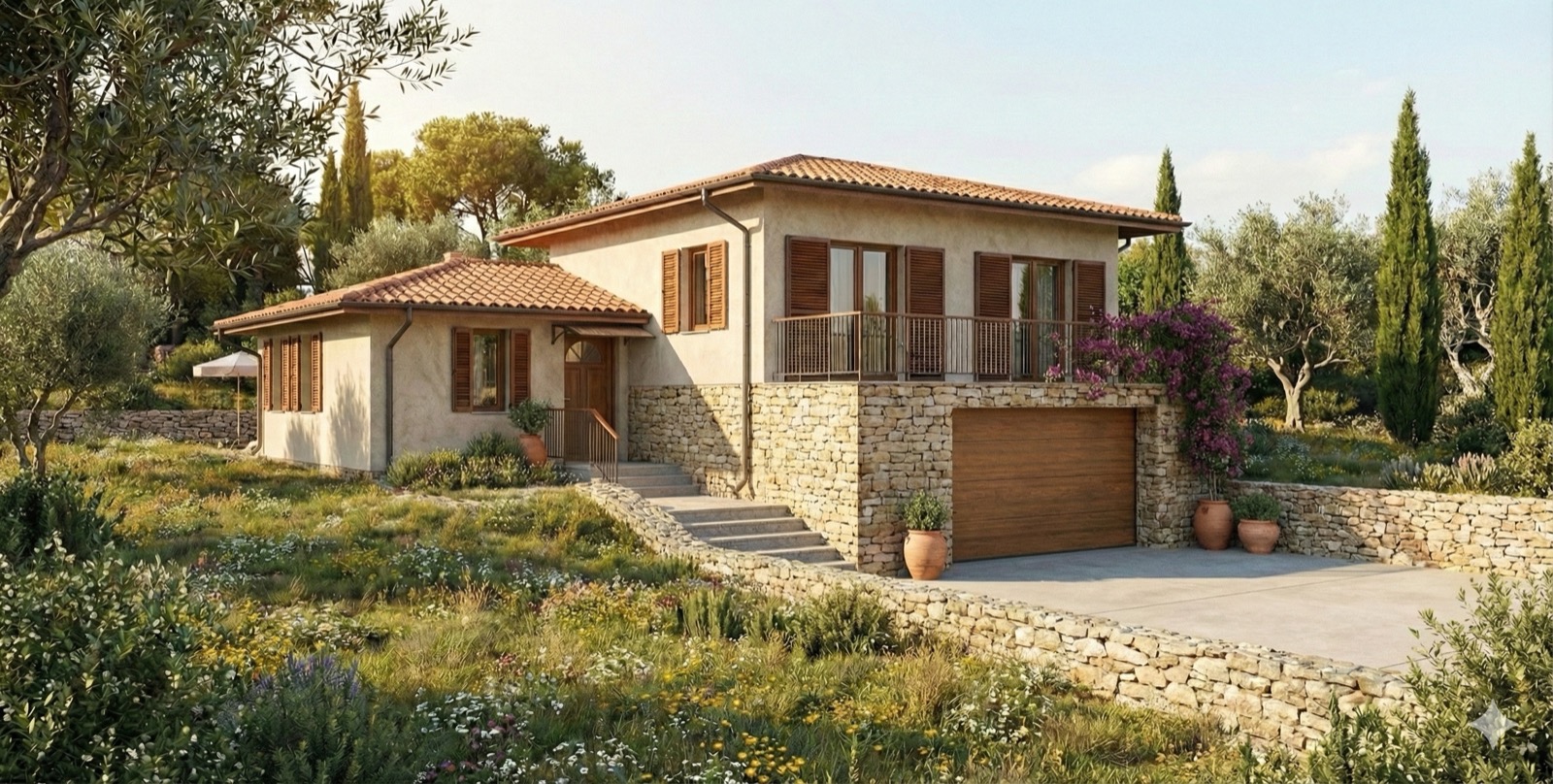
Prefab and modular construction offers an alternative to traditional building in Bulgaria. Factory-controlled quality, faster timelines, and predictable costs attract some builders, but the approach has trade-offs worth understanding.
This guide evaluates prefab and modular options for Bulgarian home construction.
Browse Traditional House Plans →
Understanding Prefab Types
Modular Homes
Factory-built sections:
How it works:
- Rooms/sections built in factory
- Transported as complete modules
- Assembled on-site
- Finishing connections made
Characteristics:
- 80-95% factory completion
- Quick on-site assembly
- Consistent quality
- Weather-independent production
Panelized Systems
Wall and roof panels:
How it works:
- Panels manufactured in factory
- Walls, floors, roof components
- Assembled on-site
- More site work than modular
Characteristics:
- 50-70% factory completion
- More flexible than modular
- Transport easier (flat panels)
- More site labor needed
SIP Construction
Structural Insulated Panels:
How it works:
- Foam core between structural boards
- High insulation values
- Load-bearing panels
- Quick assembly
Characteristics:
- High energy efficiency
- Good strength-to-weight
- Specialty installation
- Popular in colder climates
Kit Homes
Component packages:
How it works:
- Pre-cut materials delivered
- Assembly by owner or builder
- Traditional construction methods
- Most site work of all types
Characteristics:
- Lowest factory completion
- Most flexible
- Skill dependent assembly
- Material cost savings
Bulgarian Prefab Market
Current Availability
What’s offered in Bulgaria:
Local manufacturers:
- Wooden frame systems growing
- SIP panel producers emerging
- Modular still limited
- Quality improving
Imported options:
- German/Austrian quality systems
- Higher cost but proven quality
- Transport adds expense
- Installation expertise needed
Market Challenges
Bulgarian-specific issues:
Limited supply:
- Few established manufacturers
- Import costs significant
- Less competition = higher prices
- Limited design options
Infrastructure:
- Transport of large modules challenging
- Rural site access issues
- Crane availability/cost
- Road restrictions
Perception:
- Traditional building preference
- Quality concerns (often unfounded)
- Resale uncertainty
- Less established market
Cost Comparison
Prefab vs. Traditional Costs
Realistic comparison:
Traditional construction (80m²):
| Item | Cost |
|---|---|
| Foundation | €8,000 |
| Structure | €25,000 |
| Roof | €8,000 |
| Windows/doors | €6,000 |
| MEP | €10,000 |
| Interior finishing | €15,000 |
| Total | €72,000 |
| Per m² | €900 |
Prefab panelized (80m²):
| Item | Cost |
|---|---|
| Foundation | €8,000 |
| Prefab kit | €45,000 |
| Delivery | €3,000 |
| Assembly | €8,000 |
| MEP | €8,000 |
| Finishing | €10,000 |
| Total | €82,000 |
| Per m² | €1,025 |
Imported modular (80m²):
| Item | Cost |
|---|---|
| Foundation | €8,000 |
| Modular units | €55,000 |
| Transport/crane | €8,000 |
| Site connections | €5,000 |
| Finishing | €6,000 |
| Total | €82,000 |
| Per m² | €1,025 |
Cost Analysis
Key findings:
- Prefab often costs 10-20% more in Bulgaria
- Traditional building is well-established, competitive
- Prefab savings depend on labor costs
- Import transport adds significant cost
- Foundation costs similar regardless
Timeline Comparison
Traditional Building
Standard timeline (80m²):
| Phase | Duration |
|---|---|
| Foundation | 2-4 weeks |
| Structure | 6-10 weeks |
| Roof | 2-3 weeks |
| MEP rough-in | 3-4 weeks |
| Interior | 8-12 weeks |
| Total | 6-8 months |
Prefab Building
Prefab timeline (80m²):
| Phase | Duration |
|---|---|
| Factory production | 4-8 weeks |
| Foundation (concurrent) | 2-4 weeks |
| Delivery and assembly | 1-2 weeks |
| Connections and finishing | 4-6 weeks |
| Total | 3-5 months |
Timeline Analysis
Prefab offers:
- 30-50% time reduction
- Less weather dependency
- More predictable schedule
- Faster move-in possible
But consider:
- Factory lead times vary
- Delivery scheduling critical
- Site must be ready
- Less flexibility for changes
Quality Considerations
Factory Quality Advantages
Controlled environment benefits:
Consistency:
- Climate-controlled production
- Jig-built precision
- Quality control processes
- Material storage proper
Efficiency:
- Less material waste
- Optimized production
- Skilled workers
- Repeatable processes
Quality Concerns
Potential issues:
Transport damage:
- Modules stressed in transit
- Connection points vulnerable
- Inspection before acceptance critical
Site connections:
- Junction quality critical
- Waterproofing at connections
- Thermal bridging possible
- Skilled installation needed
Foundation matching:
- Precision required
- Tolerance for errors low
- Survey accuracy essential
Suitability Assessment
When Prefab Makes Sense
Consider prefab when:
- Time is critical priority
- Remote site with labor challenges
- Consistent quality important
- Multiple similar units needed
- Energy efficiency priority (SIP)
- Weather conditions challenging
When Traditional is Better
Choose traditional when:
- Budget is primary concern
- Local labor is competitive
- Site access is restricted
- Custom design needed
- Expandability planned
- Resale perception matters
Bulgarian Context
For most Bulgarian projects:
- Traditional construction remains competitive
- Labor costs favor traditional
- Material availability good
- Prefab premium often not justified
- Under-100m² self-build works well traditionally
Our Approach
Why We Focus on Traditional Plans
Our plans support traditional construction:
Advantages for Bulgarian building:
- Works with local labor
- Familiar techniques
- Competitive costs
- Flexible execution
- Self-build compatible (under 100m²)
C-101 (80m²):
- Traditional construction optimized
- Self-build eligible
- Proven efficient design
- €2,168 (with 15% discount)
- View C-101 →
C-102 (97m²):
- Traditional methods
- Maximum self-build size
- Excellent value proposition
- €2,375 (with 15% discount)
- View C-102 →
Adaptable to Prefab
Our plans can work with prefab systems:
- Floor plans adaptable
- Structural principles apply
- Engineering may need adjustment
- Manufacturer consultation required
Frequently Asked Questions
Is prefab cheaper in Bulgaria?
Generally no. Traditional construction in Bulgaria is competitive, and prefab often costs 10-20% more due to limited local manufacturing and import costs. The cost equation may change as the market develops.
How fast can a prefab home be built?
From order to move-in: 3-5 months typically. Factory production takes 4-8 weeks, then 1-2 weeks for assembly, plus finishing. Compare to 6-8 months for traditional construction.
Are prefab homes lower quality?
No. Factory conditions often produce better quality than site building. However, quality depends on manufacturer reputation and installation expertise. Research your specific supplier carefully.
Can I get a mortgage for a prefab home?
Banks are increasingly accepting prefab homes. However, you may face more questions or requirements than for traditional construction. Check with lenders before committing.
Do prefab homes hold their value?
In Western markets, quality prefab resells well. Bulgarian market perception is still developing. High-quality prefab should retain value; lesser-known systems may face skepticism.
Make an Informed Choice
Prefab offers genuine advantages in some situations, but traditional construction remains the practical choice for most Bulgarian home projects. Evaluate your specific priorities—time, cost, quality, flexibility—before deciding.
Your next steps:
- Browse house plans — see traditional-optimized designs
- Compare quotes: traditional vs. prefab
- Assess your site access and timeline needs
- Contact Architect Miglena for construction method guidance
All plans include 15% discount—build your Bulgarian home with the right method.