

Solar Panels House Design Bulgaria 2026 | Integration Guide
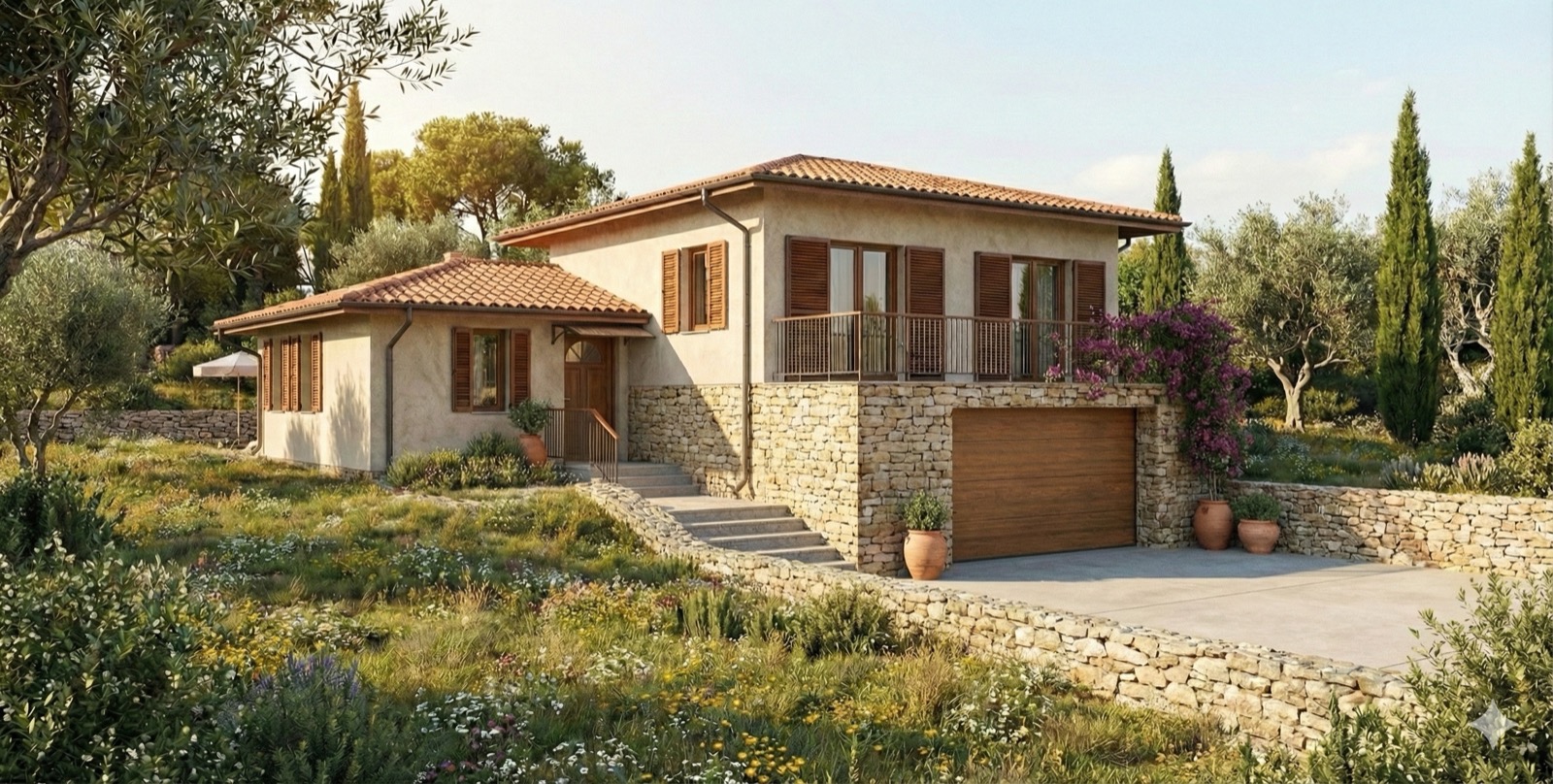
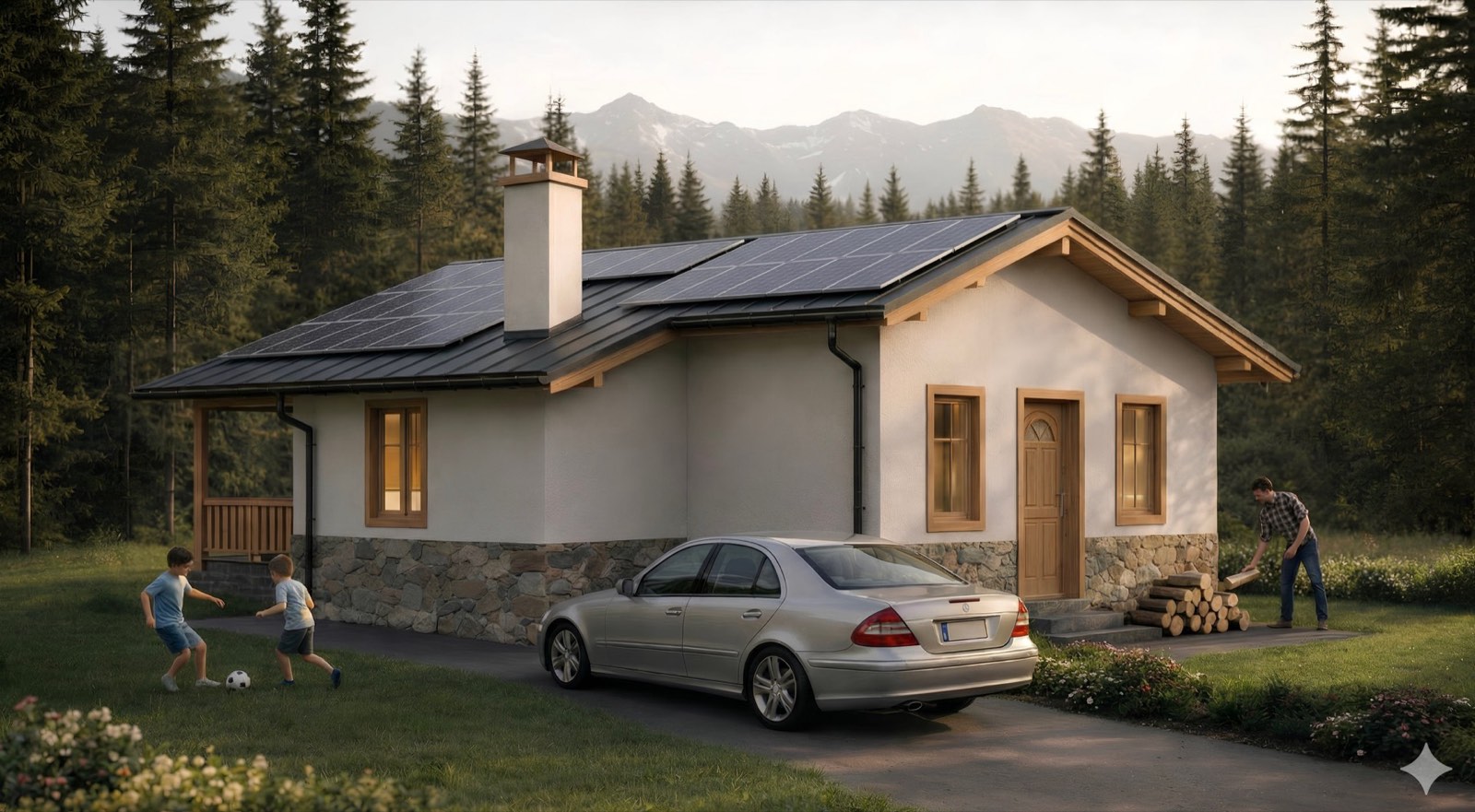
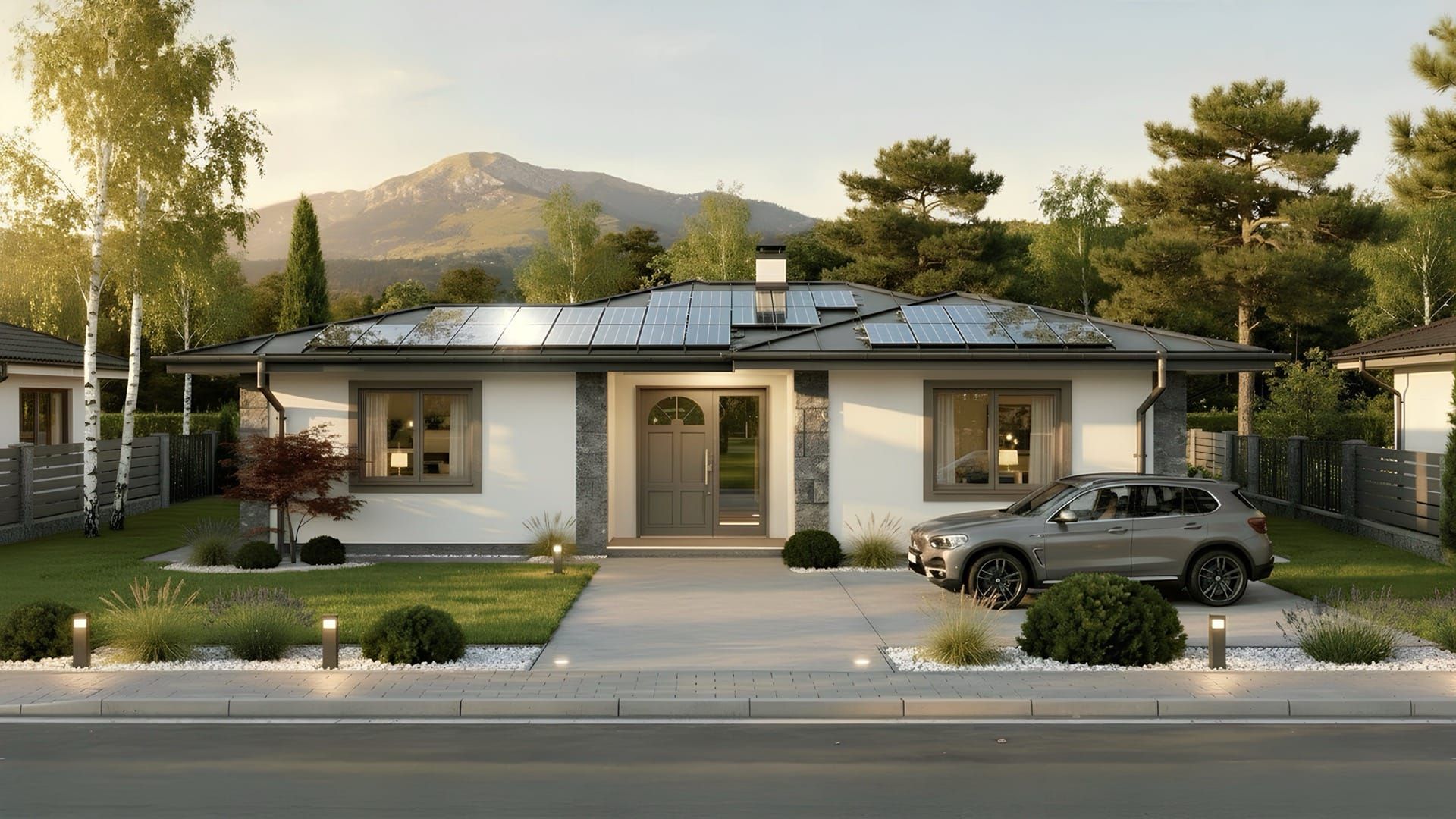
Bulgaria’s abundant sunshine makes solar power an excellent investment for new home construction. With proper planning during the design phase, your house can harness solar energy efficiently while maintaining architectural beauty.
This guide covers how to design your Bulgarian home with solar integration in mind.
Browse Energy-Efficient House Plans →
Why Solar in Bulgaria?
Excellent Solar Resource
Bulgaria receives substantial solar radiation:
- 1,400-1,800 kWh/m² annually (varies by region)
- 250+ sunny days per year in southern regions
- Comparable to northern Spain or southern France
- Better than Germany (which leads in solar adoption)
Financial Benefits
Solar makes economic sense:
- Electricity costs rising (€0.15-0.20/kWh)
- Net metering available for excess production
- Government incentives may apply
- 20-25 year panel lifespan
- Near-zero operating costs after installation
Energy Independence
Reduce reliance on grid:
- Protection from price increases
- Power during grid outages (with battery)
- Reduced carbon footprint
- Self-sufficiency aligns with rural living
Designing for Solar
Roof Orientation
The most critical factor:
Optimal: South-facing (180° azimuth)
- Maximum annual production
- Consistent output throughout day
- Best for winter production
Good: Southeast or Southwest (135°-225°)
- 90-95% of optimal production
- Morning or afternoon peak
- Often architecturally practical
Acceptable: East or West (90° or 270°)
- 80-85% of optimal production
- Split system possible (panels both sides)
- Works when south isn’t feasible
Avoid: North-facing
- Significantly reduced production
- Only viable if no alternative
Roof Pitch
Angle affects seasonal performance:
| Roof Pitch | Best Season | Annual Performance |
|---|---|---|
| 30-35° | Year-round balanced | Optimal for Bulgaria |
| 40-45° | Winter optimized | Good for heating focus |
| 15-25° | Summer optimized | Good for cooling focus |
| Flat | Varies | Requires mounting frames |
Our house plans typically use 30-35° pitches, ideal for solar.
Roof Area
Space requirements for typical systems:
| System Size | Area Needed | Annual Production |
|---|---|---|
| 3 kW | 15-20m² | 3,600-4,500 kWh |
| 5 kW | 25-35m² | 6,000-7,500 kWh |
| 8 kW | 40-55m² | 9,600-12,000 kWh |
| 10 kW | 50-70m² | 12,000-15,000 kWh |
Shading Analysis
Even partial shade dramatically reduces output:
- Map shadows throughout the year
- Consider neighboring structures
- Evaluate tree growth over time
- Chimneys and dormers create shadows
- Plan roof layout to minimize obstruction
Structural Considerations
Roofs must support panel weight:
- Standard panels: 15-20 kg/m²
- Plus mounting hardware
- Snow load already factors in structure
- Most new construction easily accommodates
- Verify with structural engineer
System Components
Solar Panels
Technology options:
Monocrystalline:
- Highest efficiency (20-22%)
- Best for limited roof space
- Premium cost
- Sleek black appearance
Polycrystalline:
- Good efficiency (15-17%)
- More affordable
- Blue appearance
- Larger area needed
Thin-film:
- Lower efficiency (10-13%)
- Flexible applications
- Lowest cost per watt
- Requires most space
Inverters
Converting DC to AC power:
String inverters:
- One central unit
- Lower cost
- Shading affects entire array
- Standard choice for simple roofs
Microinverters:
- One per panel
- Higher cost
- Individual panel optimization
- Better for partial shading
- Easier expansion
Power optimizers:
- Middle ground
- Panel-level optimization
- Central inverter
- Good value for complex roofs
Battery Storage
For energy independence:
With battery:
- Power during outages
- Use solar after sunset
- Maximize self-consumption
- Higher initial investment
- €3,000-8,000 for home systems
Without battery:
- Grid acts as virtual storage
- Net metering credits
- Lower upfront cost
- Grid-dependent
Sizing Your System
Calculate Energy Needs
Typical Bulgarian home consumption:
| Home Type | Annual Consumption |
|---|---|
| Efficient 80m² | 3,000-4,500 kWh |
| Standard 100m² | 4,000-6,000 kWh |
| Large 150m² | 6,000-9,000 kWh |
| With heat pump | Add 2,000-4,000 kWh |
| With EV | Add 2,000-3,500 kWh |
Match Production to Consumption
General sizing guidance:
- Cover 100% of consumption: Full independence
- Cover 80%: Practical for most budgets
- Cover 60%: Significant offset
- Oversizing: Sells excess to grid
Our Plans and Solar
How our designs accommodate solar:
C-101 (80m²):
- ~50m² south-facing roof possible
- Supports 4-6 kW system
- Covers typical consumption
C-102 (97m²):
- ~60m² optimal roof area
- Supports 5-8 kW system
- Room for future expansion
Larger plans (A-101, B-series):
- 80-120m² available roof
- 8-15 kW systems possible
- Full energy independence achievable
Installation Costs
System Investment
Typical costs in Bulgaria (2026):
| System Size | Equipment + Install |
|---|---|
| 3 kW | €3,500-5,000 |
| 5 kW | €5,000-7,500 |
| 8 kW | €8,000-11,000 |
| 10 kW | €10,000-14,000 |
| Battery (10 kWh) | €4,000-7,000 |
Payback Period
Return on investment calculation:
- Average electricity price: €0.18/kWh
- 5 kW system produces: ~6,000 kWh/year
- Annual savings: ~€1,080
- System cost: ~€6,000
- Simple payback: 5-6 years
After payback, essentially free electricity for 15-20 more years.
Available Incentives
Check current programs:
- EU funding programs (periodic)
- Bulgarian energy efficiency programs
- Net metering regulations
- Business incentives for commercial use
- Local municipality programs
Integration Tips
Design Phase
Plan during architecture:
- Orient house for solar access
- Size roof areas appropriately
- Plan conduit runs to inverter location
- Position electrical panel strategically
- Consider future battery location
Construction Phase
Prepare for easy installation:
- Install conduit during construction
- Reinforce roof if needed
- Mark penetration points
- Leave space for equipment
- Plan aesthetic integration
Aesthetic Integration
Solar doesn’t have to look bad:
- Black panels on dark roofs blend
- Frame color matching available
- Integrated roof tiles option
- Strategic placement
- Clean cable management
Regional Considerations
Mountain Areas
For properties near Troyan or Bansko:
- Snow may cover panels temporarily
- Steeper pitch helps self-clearing
- Lower temperatures improve efficiency
- More heating demand to offset
- Ensure adequate production for winter
Coastal Areas
- Excellent solar resource
- Sea air corrosion consideration
- Cooling demand significant
- Salt spray on panels
- Regular cleaning beneficial
Southern Regions
For Plovdiv or Stara Zagora:
- Best solar resource in Bulgaria
- Longest production season
- Both heating and cooling needs
- Optimal for maximum production
Frequently Asked Questions
How long do solar panels last?
Quality panels are warranted for 25 years at 80%+ output. Many last 30+ years with gradual decline. Inverters typically need replacement once (10-15 year lifespan).
What about cloudy days?
Panels produce power in overcast conditions, just less than full sun. Diffuse light still generates electricity. Annual production averages account for weather patterns.
Can I install solar myself?
Panel mounting is physically possible for DIYers. However, electrical connections require licensed electrician in Bulgaria. Most people use certified installers for warranty and safety.
Does solar increase property value?
Generally yes. Energy-efficient features attract buyers. The value increase varies but often exceeds remaining system value. Future energy cost protection is marketable.
What maintenance is required?
Minimal. Occasional cleaning (1-2 times/year), visual inspection, and monitoring output. No moving parts means little can fail. Professional inspection every 2-3 years recommended.
Start Your Solar-Ready Design
Building new offers the perfect opportunity to design for solar from the start. Our house plans can be oriented and adapted for optimal solar integration.
Your next steps:
- Browse energy-efficient house plans — all can accommodate solar
- Consider your site’s solar potential
- Calculate your energy needs
- Contact Architect Miglena for solar-optimized design advice
All plans include 15% discount—build your energy-independent Bulgarian home today.